
Anyone who has played a gig has dealt with a soundcheck in most 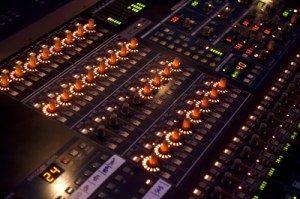 cases. If you don’t get one, then your first tune is usually what the audio engineer uses to tweak your sound. But, let’s say you get a soundcheck. This time is crucial for you and your band to have a shot at sounding the best you can on stage. It is also a time where you can either build or destroy your credibility with the audio engineer. Now, what would destroy that credibility? Or build it for that matter? Funny you should ask . . .
Before we talk about credibility, there are some things you should know. Unless you are paying the audio engineer (and in the case of many clubs, you aren’t directly), they are not required to make you sound good. Is it their job? Yes. Do they have to do it to the best of their ability? Absolutely not and here’s why: the more you irritate them, the less they will want to make you sound good. Unfortunately, these folks have a thankless job and yet they are some of the most important people in the show. You owe them your respect. Think about these things as we go over some credibility killers:
- During soundcheck, the audio engineer owns the stage!
Regardless of how excited you might be to play a particular venue (and you should be), the stage isn’t yours, especially during soundcheck. Treat it like your grandmother’s living room. Only, the audio engineer is in charge. When they say jump, you say how high.
- Soundcheck is NOT personal practice/warmup time!
This rule is broken by nearly everyone at some point and is a surefire way to piss off the audio engineer when he or she is trying to get a level on another instrument. Just because your gear is setup and turned on, doesn’t mean you should be playing. Warmups should be done away from the stage unplugged or through a headphone amp (i.e. iRig). You should be playing only when the audio engineer asks you to (See #1). The only caveat here is when the band has clearance to check a song or section as a short rehearsal. This is not something decided by the band though. Always check with the audio engineer prior to making any unplanned noise on stage.
- The audio engineer doesn’t care about your amazing solo
Yes, it might be amazing but their job is to blend you with everything else. If the only thing you do during soundcheck is noodle, then he or she isn’t getting an accurate representation of your sound. Run through your main patch changes along with the varied styles of playing you will have during the set. Make sure your patch levels are balanced and ask the audio engineer if they are getting what they need from you. Furthermore, don’t play any longer than they ask you to.
- Once your volume is set at soundcheck, don’t turn it up
There is nothing worse than engaging in volume wars with not only the audio engineer but everyone else on stage. This is especially true if other individuals on stage are using in-ears. Furthermore, if you piss off the audio engineer bad enough, they may just hit mute on your channel. Seriously, it takes next to no effort on their part and you won’t know the difference until it’s too late. It’s generally better to just keep your volume at the same level unless you clear it with the audio engineer.
- Don’t get an attitude with the audio engineer.
These folks don’t deal well with entitlement or diva-like behavior. They don’t have time for it and it is never justified to behave this way. Yep, that amazing tone you crafted might sound great in the studio but it may not work live. Be prepared to make adjustments during soundcheck and understand that he or she isn’t doing it to cramp your style. They are doing it because the band has to blend in order to sound good.
This list is certainly not all-inclusive but it gives you a good idea of how you might want to behave at soundcheck. Your (or your band’s) credibility hinges on the respect you give to those that you work with.
Do you have other pointers for soundcheck? Please share in the comments below!
 Music Business Etiquette: The Ground Rules
What I do for the first song that I tell the band to play during sound check is I have the mains shut off and only have the stage monitors active. I tell them to play it like they mean it and then ask them if everyone can hear themselves clearly. Sometimes this might take more than one attempt until everyone is satisfied with the stage mix. This includes all vocals. At this point the stage volume MUST not change. Then I ask for one more song and I bring the mains up and dial in the mix. It is essential for the stage mix to be sound checked with the mains off.
LikeLiked by 1 person
Different schools of thought here. In loud venues, the on-stage spill from the mains can be louder than a bandmate’s cross-stage amp. In those cases, there’s no way for the musicians to anticipate whether the wedge mix will work until the mains are up.
LikeLiked by 2 people
This is well needed. Most small bands don’t have a clue, or they don’t have a strong enough leader to control the situation. It’s ok to say; “Shut up.”
Darryl
LikeLike
‘It is essential for the stage mix to be sound checked with the mains off’. Gotta call BS on this one. The mains affect stage sound considerably, especially in small clubs. I’ve worked with many big name artists who won’t sound check unless the mains are on. You may want to get started with the mains off but you will only get a rough idea of what the stage is going to sound like until the mains are on. Stage sound is always a combination of monitors and what is coming back on stage from FOH.
LikeLike
Read it again…he stated that he started that way then turned the mains on
LikeLike
I also do this for the same reasons!
LikeLike
Then you are a very bad audio engineer with no concept of audio dynamics and frequency changes when the mains are on.
LikeLike
Dave, I fully agree with trying to get the band to play & sing at performance volume during the soundcheck. And I agree that once you have that level, in a perfect world, the stage volume must not change. But I strongly disagree with you that ” It is essential for the stage mix to be sound checked with the mains off.”
Dave, depending on the size of the room, performers actually get some of their sound needs met by hearing the mains while they play. Also, you can generally have the monitor mix lower when they can hear some of themselves in the mains. Peace.—Ken
LikeLiked by 1 person
I am a working professional sound engineer, have been for 30 years. This list is pretty darn accurate for the muscian.
For the engineer during sound check.
1) be prepared for you band. The more you know the quicker it will be.
2) Expect the plot and input you have to be wrong. 90% of the time they are. It happens. Mainly because the management company for the band sent an outdated one. Bands change and adapt as they grow. Just expect it.
3) Don’t spend 25 mins on the drums. Nothing worse. Unless they are way out of tune get a good level to build from.
4) Be quick. I try to get the band off stage as soon as possible they don’t like being there in most cases either. Get levels run through a couple songs hit the main points.
5) Be nice, we have can be a serrly bunch. Hell there was even an article on it. ( haha).
Remember why we chose this career . I would rather be doing this than working in a cubicle.
So theres my 2 cents. Hope you get something from it.
LikeLiked by 4 people
Thanks so much for your input, Jeff! This is an excellent overview and I think it’s spot on. It takes everyone working together to make shows happen!
LikeLike
BE THERE ON TIME!!!!
LikeLiked by 3 people
I couldn’t agree more. However, on my watch, if someone has an issue with tardiness, then they will never make it to soundcheck because they will be replaced. Save for extreme circumstances, there is never an excuse to be late.
LikeLike
Two related comments-
#1- set your gear up as fast as you can, then leave the stage. Get away and let the sound guy mic your gear- there is NOTHING that will put a mix guy in a crappier mood than a face full of snare rimshot while placing a kick mic, or a face full of Marshall while plugging in a guitar mic.
#2- get your gear OFF THE DANG STAGE. Dedicate someone to get your gear gone. Do not all go sell merch, flirt, drink, or whatever bands do after they are done playing. Make sure you have a sober bandmember or two who know how to pack up everyone’s rig and get them off the stage. Your humble sound an either has another band to put onstage or has to tear down his rig and go home. Either way, your gear sitting in the way is a huge sign of disrespect.
Get in as fast as possible, get out as fast as possible. Have your rigs together. Cable ties and color coded tape are your friends. Loom as many cables as possible togther, tape AC and guitar signal runs togther for your pedalboard for example, so it’s just one run. If they say you have a 20 minute set change, be done in 10. That will win you respect!
LikeLiked by 2 people
Spot on!
LikeLike
Amen, and opening bands PLEASE get your amps and cabs off stage immediately and THEN wrap and pack cables and gear OFFSTAGE ! Nothing pisses me off more than watching some asshat standing there yapping and rolling his guitar cable onstage and taking 15 min to move his shit out of the way. If you do this opening for a national act you WILL catch wrath from a tour/stage manager.
LikeLiked by 2 people
When the sound tech is who is drawing the crowd, he can dominate my stage. But it ain’t “Soundman” on the marquee, is it? Don’t interfere with my process, I won’t interfere with yours.
LikeLiked by 1 person
Who the hell is Jimmy Miller?
LikeLiked by 3 people
MUST have some Gold & Platinum on his wall!…No wait, I work with Gold & Platinum artists. They are quite humble and understanding & accommodating of “The Rules!” It’s always the “up & comers” that have the unearned pretentiousness.
LikeLiked by 1 person
THE jimmy miller?
LikeLiked by 1 person
Dunno but i know a few duck voice effects and mute buttons when he comes my way
LikeLike
Someone who sounds terrible on stage because the mains were off the whole set ……. that way the sound tech didnt interfere…..
LikeLike
Once a Diva, always a Diva..hilarious!
LikeLike
Mute…. Haha you have trouble with sound don’t you.. And you blame it on bad sound guys… We do it on purpose bro
LikeLike
Hey, you have a “Suck Button” on your console? The ones on the new Midas boards are real nice! It automatically detects lack of skill & engages appropriately! 😉
LikeLiked by 2 people
Ha-ha. Typical egotistical idiot
LikeLike
That attitude is the quickest way for me to mix you in the worst possible way. When I do that, the audience leaves telling other people how much you sucked, because after all, it’s your name on the marquee, not mine!
LikeLiked by 1 person
And that attitude is the quickest way to get me to badmouth you to every musician I know and do my best to affect your ability to get hired in the future. Anyone as unprofessional as to tank a show because he’s mad at one of the band members doesn’t deserve to get work. And if you tank me, just remember that I have a fuzz box and I know how to abuse it.
LikeLiked by 1 person
Jimmy Miller, at Soundcheck it is MY stage and MY process to be able to achieve the best result for YOU. If we work together it’ll be a good out come. If you try to dominate Soundcheck, we’ll have a problem.
LikeLiked by 1 person
Yeah like you getting fired.
LikeLike
Guess my band won’t be hiring you, then.
LikeLiked by 1 person
The only marquee your name is on is the one under the name of the bride and groom party. Unless you are hiring the sound company, get off my lawn until you’ve been invited.
LikeLiked by 1 person
So you’re the guy that gets the pitch shifter in his wedge.
LikeLiked by 1 person
Pitch shifter or delay….either works well…
LikeLike
The second that shows up in my wedge, the show stops and we have a little heart to heart talk over the mic.
LikeLike
And you’re the guy who gets the dimed fuzzbox with no speaker sim to protect your tweeters.
LikeLike
jep, it looks you are the kind of guy, the article was written about…
LikeLiked by 1 person
Thats why you make 40 bucks a night playing at VFW halls…
LikeLike
You wish, pal.
LikeLike
yep and when you get a crap mix because of that attitude some of that “crowd” might not come to see you again
LikeLike
I do agree that being the sound crew is a thankless job. And that’s coming from a musician. I play drums, sing. But also we do sound and light production. Before I started doing this, I was sure it was all about me. After several years of doing sound, I now have the utmost respect for the sound crew at our shows. Most production companies are fantastic, but every once in a while you will run into some you can’t work with, no matter how respectful you are. Agreed, 98 percent are very professional. My 2 cents.
LikeLiked by 1 person
How to gain friends and influence people…
LikeLiked by 1 person
See Jimmy. Jimmy is an idiot. See Jimmy eat poo. Suck a turd jimmy!
LikeLike
Good luck with that awesome attitude. Or having anyone hear you at the show. Assclown
LikeLike
your “process” without a soundman won’t make it to the publics ears and you won’t be selling any merch on that night…
LikeLiked by 1 person
Your an idiot.
LikeLike
And that there will get you kicked off my stage and no sound out of my pa. The sound guy is the one that can make you sound good or will make you sound the worse that you ever have and trust me im the one that would do it just to prove to you that you aint the bomb just cause you sing or play an instrument cause guess what im a drummer and a soundman. Now get off my stage with that attitude lol
LikeLike
I notice that all of the soundmen’s first thought when someone says something they don’t like is to sabotage them. What a bunch of pussies. Maybe you could try being a man and talk through your differences. I give the same respect I get. If someone told me to jump, I wouldn’t say how high, I’d say kiss may ass.
LikeLike
Golden stuff here…..although the ones that really need to see this never will….they are too busy setting up PVC skeins…….but really, 3&4 people !!!
Can I add this???….have something prepared for if you do get asked to check with a song. Something that showcases all the instruments, something with all your vocals or tracks…something that is going to give me an idea of what’s about to happen? Have that song decided on before hand, nothing worse than saying go ahead and play one for me and then you all look at each other and debate it.
Here’s another….I don’t give a shit about your choreographery or where you’re gonna set your cool homemade ego box…it can wait, save it for the green room
One more…if we’re checking monitors, take out your earplugs & go stand in front of yours…..I could go on and on…..
LikeLiked by 1 person
Excellent point! Having a song prepared that showcases the whole group is essential. Otherwise, the audio engineer isn’t getting an accurate representation of the band.
LikeLiked by 1 person
Excellent points Jason, couldn’t agree more. Now, when is someone gonna give a greenroom? lol
LikeLiked by 1 person
give me a greenroom? damn. 🙂
LikeLike
Good advice from everyone. My addition would be along the lines of Mark’s number 1, horn players, don’t set your “babies” in the middle of everything while the sound guy is micing up the band.
And polite bands bus them selves, don’t leave full drinks on the stage during strike.
LikeLiked by 2 people
Even though you aren’t paying the audio engineer, you should. They are more important (and usually do a better job) than the bartender/waitresses that always get a Tip.
Give the Sound Man a nice $ Tip and for Heaven sake say Thank You… They will appreciate it and definitely REMEMBER.
LikeLiked by 3 people
Excellent tip! A thank you goes a long way!
LikeLike
Most excellent advice. Dont change your settings or levels as u go or you’re just gonna piss em off. I’ve had many a sound tech tell me that guitar players can be their own worst enemies. Its the sound up front that matters….not what u can hear.
LikeLiked by 2 people
I couldn’t agree more! Guitar players can be absolutely horrendous . . . and I’m a guitar player! Many times it takes someone pulling you (the guitar player) aside and showing you the whole picture and why there are issues. I have had some audio engineering friends help me out by showing where guitar players go wrong in a lot of cases. It’s a humbling experience but I am extremely happy they did because the end result is way better. It’s all in the perspective!
LikeLike
most of the time I’m mostly blending the Mains mix based on how loud the guitar or drummer is. Even as a musician myself (guitar, bass, drums) I wish there was more musicians understood that. Unless you are playing in a room for over 100 people, 30-50 watts for a guitar amp is more than enough to hear yourself onstage
LikeLike
Touring? Unless you’re blessed with an AVID Venue, invest (yes, INVEST) in a Black Box Recorder or similar device capable of multichannel recording from the console channel inserts – instant Virtual Soundcheck. After the first show, you’ve got a “Band In A Box” and your soundchecks become a “line check” to make sure the mics/DI’s/etc. are all placed and plugged in.
LikeLike
Sort of, except using a recording for soundcheck doesn’t account for feedback from monitors, stage volume, or room dynamics, which make up about 75% of mixing decisions.
Multichannel recording is a worthy investment, though. Can’t afford a studio? Mix a live album and get paid to do it.
LikeLike
Okay, both hats on again. I can relate to the article. But it doesn’t mention a couple of important things. How about the sound guys remember that musicians are people, too. After the last two years, and especially after last night, I could give you all an earful about inept, incompetent, and impatient sound guys. If you don’t want to be there, or you showed up to get the job done ASAP, then don’t show up. Musicians aren’t cattle being herded through the gate. Oh, and occasionally, a band may have a new member to work in and soundcheck might be the only time available to do some rehearsal (of course, if time and the situation allows, sorry to steal your shot at rebuking me on this). And let’s talk about credibility. Want to keep credibly with musicians, especially one with over 20 years of pro sound experience? How about getting rid of feedback, show up with gear that works, doesn’t hum or buzz, and doesn’t look like you dragged it through a barnyard and smells like it, too? Musicians aren’t always the most logical-thinking folks, but we don’t write songs from logic. We write from emotion and feelings. A lot of sound guys (me included, a long time ago in my production career) would do well to remember that. And I have YET to see a sound guy mention how important it is for musicians and production people to try to work together and stop the us-against-then attitude. Frankly, I don’t have much hope of that happening.
LikeLiked by 3 people
Well, for starters, I’m sorry you’ve had such a bad experience. There are plenty of bad apples on both sides of the house and in reality, there shouldn’t be “both sides.” It should really be one team. That being said, this article was mainly targeting musician’s behavior towards sound engineers, not the other way around. I have seen sound guys mention how important it is for folks to work together. I will admit though that the good ones are hard to find. Ultimately , we all have to work as a team. We can only control ourselves and the more that musicians and sound engineers can do to show respect for each other, then the better off everyone will be. I wish you better experiences in the future.
LikeLiked by 2 people
Thanx for the response, Aaron. One of the bad experiences was from the company that I worked for for 21 years and retired from to play! That being said, I realize what the target audience was. I don’t totally disagree, I’ve been on the console side of dealing with inconsiderate musicians, as well. No fun. Anyone that thinks musicians are hard to deal with should try mixing an orchestra where the players are not used to reinforcement at all! And you are out-numbered! The local orchestra is about the only mixing gig I do anymore because I’ve done for years, they are used to me, and they make it worth my while. It took a long time to get their trust and finally work with me a bit for the best results (and I did my dead-level best to not interfere with their instruments, positions, mic’ing, etc).
Ya know, it wasn’t so much your article as it was the inevitable piling-on of comments that set me off. I’m (a little) better now…:o))
Good work. Thanx.
LikeLiked by 2 people
Anytime! It’s all good! We have all had bad experiences. That is what shapes our outlook. I can only imagine the challenges that come from mixing a full orchestra. Unfamiliar territory can be dicey for many musicians. Thanks so much for chiming in! It takes the whole team to make this stuff work and keep the shows going!
LikeLiked by 1 person
A lot of good points made in this article and in the comments. One thing I would never do is make a mix sound like shit because I didn’t get along with the band. I always try to get the best mix possible. But if you sound like shit to begin with, then you are only gonna sound like amplified shit. If you don’t bother to check with the sound guy after your line check, and ignore any suggestions, then I will pretty much throw in the towel at that point and hope that the next band understands the importance of good stage sound.
LikeLiked by 1 person
Awesome! Way to take the high road! We should all be like this. Regarding sounding bad, it is garbage in=garbage out. The band can’t expect the engineer to fix what wasn’t good to begin with. I smell another blog post from this. Thanks for your input!
LikeLike
Agreed, I would never make a band sound bad on purpose. That being said, I had a band that showed up 45 minutes late, kept playing and talking during sound check and didn’t listen to a word I said, then got off the stage before I even finished line checking instruments (then were rude about it when I tried to call them back). So I said to myself, “well, I guess they don’t want my help.” And left it at that.
LikeLiked by 2 people
I know this is lacking on all sides of the aisle, but sound people, stagehands, and performers are all partners in entertaining the audience. NOBODY is better than anyone else. Personally, I’ve run hundreds of bands and the first thing I tell them is “I’m the Nth member of your band because I’m the last guy that gets to do anything with your sound before it escapes.” They buy in right away to the idea that I’m on THEIR side and NOT their enemy.
I also pre-warn them that if I don’t think something is quite right about their sound, I’ll let them know. It doesn’t mean I’m being critical; I’m just trying to help them put out their best possible show. As long as I’m honest and up-front with them about MY personal involvement in the show, I’m showing them a) respect for their art, b) respect for their talent, c) my desire to have a good show, and d) my understanding of their desire to have a good show. And once you win them over with a bit of sugar, the salt goes down a little easier if you have to tell the guitar player that he needs to drop his stage volume down a bit.
LikeLiked by 2 people
This an excellent viewpoint and something I highly respect. It’s a team effort and yes, you are the Nth member of the band. Thanks for chiming in!
LikeLike
I have been at it for 20 years. A rookie mistake from musicians is not asking for what they need adjusted during the show. I’m a very attentive monitor engineer and nothing irks me more then a band member coming of the stage grumbling about how they couldn’t here instrument x. I have gotten into the habit of telling inexperienced bands this – if you don’t ask you don’t get. I’m not going to make any changes after sound check unless asked to or the guitar player turns up and weird things start to happen. My standard statement is this “I’m getting paid by the production company but I’m here for you. If you need something ask – I’m here for you guys.” It has made a big difference in the way bands interact with me. If a sound check has just ended and you are in the band sound checking next stay out of the techs way. If you are in the way you are only eating into your own time I don’t care who you think you are – mutual respect is paramount.
LikeLiked by 2 people
I couldn’t have said it better! One has to ask in order to have any chance of receiving.
LikeLike
I gave up. I just let them set up. Do a line check. Let the band do what they want. Run the show at 85 Db as requested by the casino. Read Facebook during show. Don’t care how it sounds. I can’t get the mix above drums at 85 Db anyhow. Collect check at end of week. They don’t care. I don’t care. Casino doesn’t care. As long as we don’t disturb players at Table Games. Ah. To do audio in Vegas.
LikeLike
This must have been written by a sound man.
Hello where I come from as the Singer we both work together creating MAGIC.
LikeLike
Actually, I’m a guitar player. But, I agree completely that the magic happens when we all work together. This article is mainly geared towards curtailing some of the bad habits that keeps synergy from occurring.
LikeLike
I’ve got 30 years behind the faders.
I tell musicians I can’t read your mind.
I tell them here’s how I like to work.
Point to what you want, point up or down, and I’ll follow.
This seems simple enough that most musicians can understand
(yes I went there).
If I’m hired for the evening and it’s the first time with the band,
we go through a line check when everyone sets up.
I try to judge the inputs whilst they noodle. And stage noodlers usually do it alone. Then I leave it up to them, we can sound check at x o’clock, or your first 3 tunes are sound check. First time bands opt for the sound check, veterans opt for the 3 song check. And my repeat offenders are typically done in 1.
If I’m festival I have a stage Nazi whom physical stands next to the guy I’m checking, interprets my mumbles, and moves on to the next one when we’re happy. Having the human physically interact with the musician seems to make the check more enlightening
LikeLike
most of the venues i work at do not allow sound checks. i make it a point to get them a good monitor mix and help them with stage volume. after that its “let er rip tater chip”, as long as they dont start fiddling with amp volume shows run smooth
LikeLike
As a female engineer, I often feel I have more to prove than my male counterparts. It really doesn’t help that almost every article I read refers to ‘ the sound guy’ and uses he, him etc., as this one does.
Completely agree with the content, and if bands followed these tips my life would be a lot easier. But can we get over the sexism please?
LikeLiked by 3 people
Becca, this is the most traffic my blog has ever seen and it was an honest case of forgetting to write /she. No offense was meant by it and I’ll certainly do my best to be mindful of that in the future. Im glad you appreciated the article content though and I’m happy to see that there are more and more ladies interested in/studying/working in the audio engineering career field. Thanks so much for your input!
LikeLike
Good for you Becca! My old partner owned one of the largest sound companies in Cali. He took a teen girl under his wing as an intern many years ago, and now she is his Production Mgr., and she is a fully licensed Rigger. I know bands that ASK for her specifically. You go girl and don’t let the chauvinistic egocentric idiots bug you!
LikeLiked by 2 people
Cheers to that!! Go Becca!
LikeLike
Agree Becca. Sound Tech is what I prefer.
LikeLiked by 2 people
Surely it’s just as sexist to have “more to prove than my male counterparts”…
LikeLike
This is why people hate feminists. There is no “sexism” by saying “sound guy.” it’s just the dominant word people use because female engineers aren’t, and have never been, and probably will never be common. If you came to my gig doing my sound, I would call you “sound girl.” But just because you’re ONE female engineer in an entire fleet of male engineers, I’m not going to waste valuable keyboard strokes by saying “sound man/woman,” “he/she thought that I should turn down” or “the cisgendered, breast/chalice equipped standard model human female made us sound good.”
If you feel you have more to prove, that’s your fault. I am a drum teacher (by word of mouth) and I taught a girl last year who turned out to be a pretty fantastic musician (because she loved to do it, not because I taught her) and the first thing I told her was “there are no genders in music. The only thing that matters by gender is the singer, and only because of the timbre of their voice. Don’t be a “girl drummer.” Be a drummer, or a guitarist, or a bassist or whatever you choose to be, because the “girl” or “guy” prefix is only your own ego and insecurities talking. If I see you posting videos on youtube or facebook labelled “BADASS HOT GIRL DRUMMER” wearing nothing but a bra and ripped jeans, I will stop teaching you instantly because I would be the most unrpoud of you I could ever be, and I wouldn’t want people to know I taught you.
There are no genders in audio engineering. You make us sound good, or you go home and we pay someone else. To my knowledge, there are no controls on a soundboard, DI box, or any other piece of gear that is “breast controlled only” or “use only vagina to operate,” as well as “stick penis or inert vestigial nipples inside this hole to lower guitarist’s stage volume.”
Therefore, I will reiterate, if you feel more pressure from your male peers, raise your level of skill so you do better and feel better about yourself. You are in a dominantly male trade. Why is it dominantly male? Because girls just don’t do it. Why? No one knows, no one cares. So why should an almost entirely male trade bend over backwards to replace “soundguy” with “soundperson” or “soundwoman?”
Nobody cares, and nobody knows your name, just as nobody knows my name, and I’m not going to insist that one calls me “soundmandavel” when nobody gives a shit about the soundguy anyway.
You’re one in a million. Get over it.
LikeLike
https://myspace.com/killersheeprock/music/albums
https://myspace.com/mattstands
https://myspace.com/jimifromchicago
Today we wear many hats, so as a musician, I am also a recording engineer, and often a sound guy.
LikeLike
Pingback: Soundcheck: Credibility Killers 101 | + Kardia +·
I agree with everything you said. I have a big issue with one person checking their instrument, and then immediately vacating the stage to grab a drink, use the bathroom, smoke a cigarette, etc. All of this, DURING a “15 minute” changeover! Take care of your personal shit BEFORE the last band finishes and stay on the damn stage! I build my monitor mix per instrument during the sound check, so if you’re not there on stage, you don’t get anything in your monitor.
My other pet peeve is to check at the volume which you will be playing/singing. Nothing better then checking at 10 dB and beginning your show at 100 dB. I know I like it when my board just goes to blinking red lights!
LikeLike
“yeah well…….without the band you sound engineers wouldn’t have a f_______ job so ……quit yer whining…”
Well there ANARCHY…here’s the rub. We could try to put up with your pathetic ego for the evening….or we could do some corporate work for twice the pay and half the whining. It seems you’ve made your choice…
LikeLike
I have been on both sides of that fence it makes more sense to treat the performer with respect and dignity and not be on in a power struggle with the band for who’s really in control. Come on guys chances are you are not mixing Madison square garden here. Get over yourself and do your job which is make people sound as good as they can.
LikeLike
Hi Gang….
After reading most of these comments and statements, one thing has only been notated lightly… Music is emotional..!!! and filled with attitude. If you are a true professional musician, you have a knowledge of the impact your “GIFT”on the audience you are performing to..! But at some point, the technical side of “Live” has to play a part if you want the MUSIC to sound great…!!!!
As an audio engineer, I have been working my talents for over 40 years..
No… I am not the second coming of AE’s..!! I do mainly club gigs, but for the past 9 years has worked at a House of Worship. Try running your FOH level @ 85db at 60′..!! MAX..!!!!!!!! Everyone wears IEM’s and there are NO speakers on the stage with a drum screen..!
With my club work, it’s a crap-shoot as to what the volume may be..
I do not get a sound check, I have a full 5 piece band.. They like to show up at the last minute and play… NO SOUND CHECK..!!!!
My guitar player like to play at 95db for his typical volume and it is common for me to not have him in the house..!! His reply – “Hay Man… It’s Rock and Roll..” ( he owns a recording studio..!)
So I am forced to crank up my FOH level just to balance his level…
Now starts the bottomless pit spiral… Now the bass player turns his rig up and the the drummer, in turn, plays harder.. and now my keyboard player needs his monitor louder because ha can not hear his mix anymore… and that’s just the first set…!!!!
The only option is to crank up the house mix around the “MUD” of stage volume and hope I can get the vocals loud enough to be intelligible without feedback..!! Running up to 100db in a club is not very pleasant and some club owners get pissed…… Gee I wonder why….!!
Aaron…. I wish that my band was as disciplined in some of the examples you described in your list…. at my Church gig.. I had that kind of discipline to the volume because of the environment we were in..
Most of my band plays at H.O.W. on a regular basis, but as soon as they get out of that particular environment, the understanding of balance stage volume escapes them and they play only for themselves at times… A Band is not a group of individuals, but a team…!! And with any “Team”, there has to be an amount of cooperation between EVERYONE to make the music Awesome… Instead of the band talking to each other to find a balance of stage volume, they all start playing at what ever level they are comfortable with and the heck with how loud or quiet they are..
The saddest part is they are all gifted musicians and can play with an intense passion and feel for the music….. a few even tour with some major acts.. but I do not have a million dollar Line-array system to bury the stage volume…..
Oh if only I could run at 90-95 db as a typical volume….
The mix would be better…
The sonic quality would be better..
The band would SOUND better…
The Club owner would be HAPPY and maybe even offer to pay you more money the next time because the customers stayed to the end of the evening and spent lots of money..!!
Oh.. in case this slipped by.. Playing Music for a living IS a business..
Everyone wants to get payed for their efforts…
and More money is better..!!
Sorry for the rant….
I had a bad gig last night and am still a bit frustrated…..
My goal as an engineer is to give the band the best quality sound that
is possible… but I can not do it alone…
Dano
LikeLike
Tip the sound guy, he will remember you and your kindness. Don’t be afraid to compliment him if you hear him doing a good mix with the band before you or during sound check with other acts. Get him laid<crucial to good sound by reducing crankiness. He doesn't get to make out with the microphone wearing Lycra without being arrested or thrown out of the venue, possibly fired. So we count on YOU sometimes (great excuse to break up with that girl that wants you to sell your guitar- have her sleep with the sound guy. No STD's please) to get our wood whet. Back massages and lap dances with the strippers you invited are acceptable as well. Last , but not least: make sure he is single before you take this advice. Part of me is kidding on this an am laughing at this self amusement, the other part of me is actually kind of hopeful… Have a good day
LikeLike
This isn’t a contest and either the sound engineer OR the musician strutting around like they own the stage isn’t going to help anyone. As far as ‘throwing’ the mix goes, I don’t know any “professional” sound engineer who would do such a thing just because they got some attitude from a musician. You will only make yourself look bad. No one in the crowd is going to come up to you and say “wow, that sounded bad! did you have an argument with one of the musicians?” NO they are going to say “wow, that sounded bad! YOU SUCK!”
After 38 years in the business, I have come to the conclusion that if you approach a gig with friendliness, courtesy, and professionalism, you will have a much easier time than if you try to swat people over the head with your resume. Use your knowledge and try to educate younger artists and accept that some older artists are going to be stuck in their ways so be prepared to compromise.
LikeLike
Pingback: Tour Management: A Musician’s Quick-Reference Guide | Music Business Etiquette: The Ground Rules·
As a performer I’ve always realized that that a good rapport with sound is crucial as you are at their mercy. My comment on the article has to do with the fact that only male pronouns were used to refer to “the sound engineer”. Mix it up a little next time, say “she or he” or try to go plural and gender neutral. The sound engineer can be a woman too!!! Little girls with great sound engineering talent may be reading this article, they shouldn’t feel discouraged…
LikeLiked by 1 person
Done and done. Becca already brought this to my attention and as I already said, no offense was intended at all and it was an honest slip. This is the most traffic and feedback I have ever gotten on this blog so I’m learning too! 🙂 I certainly want everyone to feel included and I’ll certainly do my best to make sure of that in the future.
LikeLike
I couldn’t possibly agree more with this. I am on both sides of the coin. As a musician and band be ready be neat but fast and be willing to take direction. As a engineer this is everything we hope for. You make our lives easy we will take care of you. You make it painful, we will also take care of you. AND TO THE ASS that think he owns the stage as a musician, come to my club or a venue I do. You would be lucky to ever come back, but by the time I’m done with your mix you probably won’t want to.
LikeLiked by 1 person
One more thing.
Please say thank you.
Good manners cost nothing.
Even if you feel it was bad. He would gave been working hard to do his best for you.
We have seen really great engineers and some awful ones but please just say thanks
LikeLiked by 1 person
1. When My band is on the stage, the stage is MINE. I own it. I’ve been hired to be on that stage. Someone is paying me a lot of money to be there. My gear is on the stage – not yours.
2. DO NOT get in my way when I’m trying to set up. The more you stay out of my way, the faster the set will happen.
3. DO NOT stomp on or roll cases over my cables. They are premium audio cables. You don’t own them.
4. I can’t tell what the final stage volume is going to be until the full band plays. Deal with it.
5. DO NOT make the monitors shriek in my face with feedback. I make my living with these ears. Do it again and I will hurt you.
6. DO NOT talk into my mic. IT’S MY MIC. I don’t use your toothbrush – don’t use my mic. We don’t use the same mics that the other acts use. Deal with it.
7. DO NOT give me diva audio engineer attitude. DO NOT piss me off before show time. If you do, I will make it my life’s work to see that you and your sound company never works that show again.
8. DO NOT check the monitors with the mains off. That’s the mark of an amateur.
9. Make sure your FOH talk back mic is routed through the monitors. I don’t have time to decipher your hand signals.
10. If you make my set sound bad, you will be blamed – not me.
And if you do, I’ll make it my life’s work to ensure that you never work that show again.
11. We always need a good FOH engineer. If you are good, and treat us with respect, I will get work for you.
If you aren’t and you don’t, you should work on your guitar playing.
12. I was playing shows on flatbed trailers and in grass fields before you were born. Save your attitude for the local punk band.
LikeLike
Well David, I think I might have a hand signal that you may very easily decipher from FOH…
And besides, if you make it your life’s work, then maybe other engineers won’t have to put up with your ego….
LikeLike
Give me that hand signal from FOH when I’m on stage Jimmy my son, and I would probably put my guitar down and you’d have to figure out how to move faders with 4 fingers on that hand from that day forward.
LikeLike
Who we really all want to please is the audience who paid 30$ to come see and listen to You, dear musician friend, without you I don’t have a job. But remember, before us, good sounding gigs were classical in european theatres, so without me, you don’t get to play a show, so lets work as a team.
If we do so, not matter if I hate your music or am a total fan, I will do everything I can to make you sound good so your fans, or audience in case you are the knew band in town opening for the big name, so they remember how awesome your show was.
After all I am the medium, the link between you and them. So lets do it together. Soundcheck is my time, some time very little time, to make You sound as good as possible.
The rules listed above are basics, be there on time, introduce yourself, be quiet if not your turn to check, be classy and humble, have fun, make jokes(unless you drank too much last night in the bus), and please remember, your amp doesn’t go to 11.
cheers all!
LikeLike
Words of a true professional. Bravo.
LikeLike
Kudos to you, sir! Team work is where it is at. Thanks for chiming in!
LikeLike
please….restring the day before…(guitar/bass) not 5 min before to go
LikeLiked by 1 person
Excellent!
LikeLike
OK, here’s why I made that original post…I am a bass player. I have been playing professionally for over 35 years now, I don’t have platinum albums but I do very large shows with many people who do (this is all easily verifiable, BTW), and it’s patently obvious that I know what I’m doing the second I walk into the gig. In addition, we’re playing a lot of music recorded before the 90’s, and you don’t mix us like you mix a Kanye West show.
But I’ve had sound techs make the bass and bass drum so insanely loud and bassy that it’s offensive, I’ve had sound techs tell me not to plug my effects in, I’ve had sound techs try to dictate what DI I use when I bring my own (BTW, I hate most DI’s, especially that crappy Whirlwind Imp 2 that’s been sitting in a milk crate that most of you try to force on me), I’ve had them refuse to run a mic on my cab even when I bring my own really nice mic, I’ve had them tell me not to play my upright because they prefer electric, I’ve had them try to put a shield in front of my amp and the drums, which totally ruins our onstage dynamic, and I’ve been told to turn my amp completely off despite it barely being on in the first place.
I am the most cooperative guy in the world when it comes to soundchecks. I set up, I play a little bit to get a sound before the soundcheck starts proper, I don’t play when it’s time to work on someone else, if you need the floor, I yield the floor happily, I NEVER play too loud, and it all boils down to if you treat me with respect, I treat you with respect. But I want the sound I want, I want the gear I use and am comfortable with, and our band has a process that has worked gangbusters for us for years, and there’s nothing about that process that makes a sound tech’s life difficult in any way, shape or form. If anything, we make it much easier.
When we work with pro techs, they realize that and they work with us and the shows are great. The only times I’ve ever had problems are with sound techs who interfere with that process. Without fail, these techs have produced the worst mixes in history and the shows ended up being miserable for all involved.
This article was written by a sound tech who no doubt feels that all musicians are idiots. Now I don’t know what kind of bands you have to deal with, but let me assure you that I am not some 17 year old in a band full of rich kids with Marshalls cranked to infinity. I am a professional who does this for a living and have for many years. You don’t come on my gig and dictate how I’m going to do things. Now if we’re on a show where there’s a lot of switching of bands and we’re not the headliner and things need to move quickly, I’m with you. I do my best to make things easy in those circumstances and don’t get too caught up in details, and I’ll advance the gig and let you know what to expect if I do something out of the norm so there’s no surprises. But on most gigs we do, we’re either the only act there or we’re working directly with the headliner. Respect us and we respect you and we’ll be your best friends. Disrespect us and that’s when the trouble starts.
And any wise guys who get their nose out of joint because I don’t want to plug into your stupid Whirwind Imp 2 instead of my REDDI, you go ahead and put a pitch shifter on my vocal monitor. I’ll be happy to turn off my speaker simulator and introduce your tweeters to my fuzz pedal.
LikeLike
Yeah man!
LikeLike
Most in house engineers know their systems and the limits of the venue. Listen to them when doing sound check. Do not argue with them and tel them to up this freq and dim that. We know how it should sound in the venue. BE ON TIME! We tend to get irritated sitting waiting for a band to show when sound check was scheduled for a certain time. If you take a drink or 2, do not over indulge, nothing like a wasted sound engineer not caring how it sounds.
LikeLike
I find a little friendly pep talk with the band before hand useful an I explain why having their amps really loud is a bad thing. It makes it clear what is expected and helps the more novice touring musicians learn the ropes. Also, bands…. Make friends with the sound engineer, buy them a beer, it’s a better world when we’re all in it together. There are a lot if grumpy, jaded engineers out there, I’m not one of them but I’ve met a lot of them, shouting at bands and stuff. That is not cool at all. I once gave an engineer a good spanking for shouting at a shy agoraphobic singer.
LikeLiked by 1 person
Excellent practice! Making friends with the sound engineer is always a good idea.
LikeLike
You don’t seem all that interested in making friends with musicians…you seem more interested in letting them know that you’re in charge than anything. Why should we care about making friends with you with all this hostility?
LikeLike
Jimmy, I am a musician. I am not a sound engineer as you supposed and I’m rarely in charge. I did look you up out of interest in seeing your last post and you are exactly who you say you are. It looks like you have an awesome career and I wish you nothing but the best. I do wish to make friends with musicians and sound engineers alike as a performance is a team effort. This article was targeted towards helping up-and-comers with bad attitudes get out of their own way, not redirect established pros. In your last post, you mentioned the way you act on stage and that is exactly what pros do. It is exactly what all of us need to do. There are bad apples everywhere, both in the players world and the sound engineering world and I’m sorry you’ve had such bad experiences with some sound engineers. I have had mine too. Ultimately, we can only control ourselves and that is the point of this article.
LikeLike
Re: guitar player (or any band member, for that matter) that refuses to turn down to create an appropriate stage volume – I find that absorptive blankets (“shipping pads”) and duct tape work wonders. Wrap one around the offender’s head and tape tightly, although in extreme cases you may also need to tape their hands behind their back to prevent the blanket from being removed prematurely. Problem usually solved within about four minutes.
More seriously – my Old Sound Man shtick usually goes something like “Folks, my job is to take the magic you create onstage and make it louder – if it doesn’t sound great up hear it’s not gonna sound any better out there.” I find this leads to the band “self-policing” the offender(s) so I don’t have to. If not? Oh, well – I just do what I can to make it sound acceptable and pray that the musicians on my next gig are more professional and/or less immature. Life’s too short to argue about it…
LikeLike
There are some good practices in there, but the common thread in a lot of these articles (that seem to be written for newbies) is “don’t piss off the sound person or they will make your show sound bad.” Well, it’s tiresome and couldn’t be further from the truth. No matter how I may personally feel about you or your professionalism, I have no interest in running a bad sounding show. As a house engineer (at a really nice house,) ultimately I serve our customers.
http://www.thetripledoor.net
LikeLike
You are correct in assuming that this article is written for folks newer to the live music scene. My intent with the article was to help younger folks get out of their own way and understand who holds some of the cards in a live show. I certainly was not trying to insinuate that pro audio engineers will purposefully make a band sound bad; rather, the sound out front is controlled by the audio engineer and there should be a healthy respect for that. Professionals will do their job well regardless of attitudes or bad stage etiquette. I’m sorry that the underlying theme has grown tiresome for you and for what it’s worth, I’ll try to be mindful of that in the future as I continue to write. Thanks so much for chiming in!
LikeLike
Finally. Some sane words of wisdom. Thank you.
LikeLike
Pingback: Soundcheck Credibility Killer | Beta NDN Entertainment Group·
This is the soundcheck Bible. I’m always amazed how smooth and quickly soundchecks run when you abide by these simple rules. When we’re done, the most common question asked by sound engineers is, “That’s it?!”
We also have a comprehensive, yet simple stage plot we advance that contains each person’s monitor mix as a starting point. We also give them a detailed setlist with lead vox, solos, and lighting cues. Every crew thanks us up and down for these priceless items.
More than anything, treat everyone with respect and genuinely thank each crew member for their help in making you sound great. Interestingly, when we get invited back, there is no conversation about the music– instead it’s always about how nice we are and how easy we we to work with.
LikeLiked by 1 person
“We also have a comprehensive, yet simple stage plot we advance that contains each person’s monitor mix as a starting point. We also give them a detailed setlist with lead vox, solos, and lighting cues. Every crew thanks us up and down for these priceless items.”
Lee; You da man!! I love it when everyone is organized and the worst problem you face is finding a bottle of cold water to drink….
LikeLike
First, no amount of you being a dick will ever cause me to do less than my best for you, I don’t work that way. But you may find that I’ll prefer not to work with you again. Do not expect to have an unlimited time for a sound check, I don’t need it. If you do then maybe you’re not ready for this gig.
LikeLike
This article is a perfect example of why people stop, turn around and purchase their own P.A. Gear(and usually much better than the gear that a person with this attitude exhibits)and mixes the band themselves and is much better for it and much better at it!. Your views are from the stone age and they should stay there. This article gives a very bad picture/representation of the role of a so-called sound engineer(you do not deserve this title).
LikeLike
Great article and hilarious comments! The most annoying thing I’ve ever had to deal with: A young kid cranks his amp way over the house limit, puts in earplugs and then moans at me that the monitor mix ‘seems quiet’. No shit son!
LikeLike
Lots of good stuff already mentioned. As a musician, you should be prepared for anything/everything. Don’t give your sound guys/gals problems – give them options/solutions. Be on time, be in tune, put in fresh batteries before the gig, have any/all cables/adaptors/extension cords/power strips you need. Don’t add to your sound guy’s or gal’s “to-do” list. If you play an acoustic guitar, make sure you have some feedback solution, whether it is a notch filter or a soundhole plug. If you’re plugging in, there is a chance for feedback so be ready to deal with it. And it never hurts to ask the sound guy or gal where their tip jar is, or ask them what they are drinking. Do you want them to be on your side, or don’t you? Their “instrument” (the sound board and PA) is the last thing between you and your audience. Better make sure they are on your side. Everybody comes off better when you are working together.
LikeLike
A-f’ing-men! A true pro finally weighs in, and just in the nick of time. Thanks for reminding me why I love mixing live – walking the high wire with others that are happy to be there is the Biggest Thrill Of All!
Thanks, Tony!
LikeLiked by 1 person
Wow! This is unbelievable! I’ve been doing sound for 30 plus years, and privileged to be trusted with artist craft. The people I work with, be they artist or techs in my presence will be reminded when things go side ways that communication is everything set a good example have a good and professional ATTITUDE. You are serving your AUDIENCE so lets play nice in the sandbox and get your priorities straight. Enough all ready. It’s not about you.
LikeLiked by 1 person
The title of your blog is Music Business Etiquette: The Ground Rules. Besides the fact that the title itself is redundant (the term etiquette itself refers to a set of ground rules for acceptable behavior), your blog entry itself displays a troubling disregard of good etiquette in a professional setting. I’m yet another guy who’s been playing live gigs and doing sound for over three decades, and I find the tone of your blog entry arrogant and condescending. It comes across more as a splenetic rant by some irascible, burned-out old geezer. No wonder several musicians found it insulting.
In your last paragraph you declare, “Don’t get an attitude with the audio engineer….These folks don’t deal well with entitlement or diva-like behavior.” And yet much of your blog seems to exude both attitude and diva-like behavior. For example, in paragraph 1 you wrote “…the audio engineer is in charge. When they say jump, you say how high.” You go on to make statements such as “the audio engineer doesn’t care about your amazing solo” along with dire warnings not to piss-off the engineer. You even go so far as to suggest that engineers may reward band members guilty of violating the engineer’s personal code of etiquette by sabotaging their set, an act that would represent the ugliest example of entitlement, attitude, and diva-like behavior (as well as being patently unprofessional) mentioned in your entire screed.
For my part, I have had my share of problems with personalities over the years, but I’ve never encountered a situation that could not be worked-out. We have a show to do–everything else is secondary. It’s not about who is the Big Kahuna or who owns the stage, it’s all about the show. The divas, the clueless, the heroes, the fools, all come with the territory and engineers who cannot deal with the issues that come with the job, who cannot work with diverse and too often difficult personalities, and especially those who would sabotage a gig to avenge a personal grievance, are frankly in the wrong line of work and should probably find a nice cubicle somewhere and disappear into it with a cup of coffee and a hemorrhoid donut.
There are many sound points (pun intended) in your blog, but what an ugly way to express them. Perhaps you might consider a re-write using a more respectful and collaborative tone.
Lastly, for those engineers who would presume to sabotage someone’s gig, a cautionary tale: I was in the audience when just such a situation unfolded. The drummer became enraged, yelled something like “you sorry sack of shit” (off-mic, hard to hear), charged off the stage and plowed through the crowd straight to the sound booth. Heated words were exchanged, followed by punches, followed by the crowd being treated to a vicious brawl with the engineer getting his ass handed to him. The engineer departed in an ambulance and the drummer left in the back seat of a police cruiser. In the aftermath, it became THE most talked-about show in town for years afterwards. Regardless of who was right and who was wrong, the band gained quite a bit of both notoriety and free publicity that only increased their popularity and draw, while the engineer was never heard from again (at least in that town).
Thank you for your consideration of the above.
LikeLike
Sound men; don’t forget that fucking with the band by sabotaging the show also reflects directly on you. People are much more informed then they used to be and most concert-goers will immediately begin yelling at the sound man when something goes amiss. That’s a pretty good ‘credibility killer’, don’t you think?.
And to the great Eddie C., you are one of the greatest sound men who ever walked. I know you would never behave like some of these posters even if you had reason to.
LikeLiked by 1 person
Gary, thanks for chiming in. After seeing a lot of these comments pop up, I realize I probably should have articulated that statement in the blog a bit better. It is never okay to sabotage a show. Period. Regardless of whether someone is a sound engineer or a musician. My point in the article was to get up-and-comers to respect who controls the sound out front during a concert, not to insinuate that sound engineers should/would sabotage anything. Any engineer that would actually act on this, would most definitely lose his or her credibility. Real professionals are going to do their job regardless of bad behavior.
LikeLike
no brown M&Ms….period.
LikeLiked by 1 person
Since you brought the “no brown M&Ms” up: many think this the height of Tour Rider Obnoxiousness, as in “we’re so big we can demand the ridiculous and there’s nothing you can do about it except comply…”
Not so fast, Bucky –
That part of the (Van Halen, IMSC) tour rider was a super-smart test: the Road Manager could walk into the dressing room and if he saw brown M&Ms (or no M&Ms, for that matter) he could then start looking for all of the OTHER things that the local promoter didn’t pay any attention to – like those little “safety” things that keep sound/lighting techs and band members from getting killed.
So. There.
LikeLiked by 1 person
It should always be your goal to be asked back to the venue, even if you don’t care to ever play there again. Leave a good impression. Clean up your empty bottles, and it’s never a bad idea to thank the house crew from the stage at the end of the show. Thanking the folks with the “thankless” job is a good way to set yourself up for being treated right the next time you play there. The golden rule is: Don’t be a dick.
LikeLiked by 1 person